
Property sales in Dubai reach $78bn in H1 2026 But how does that impact current and prospective investors? Dubai’s real estate market …
Before the Doors Open: Why the Guggenheim Is Already Repricing Abu Dhabi Real Estate
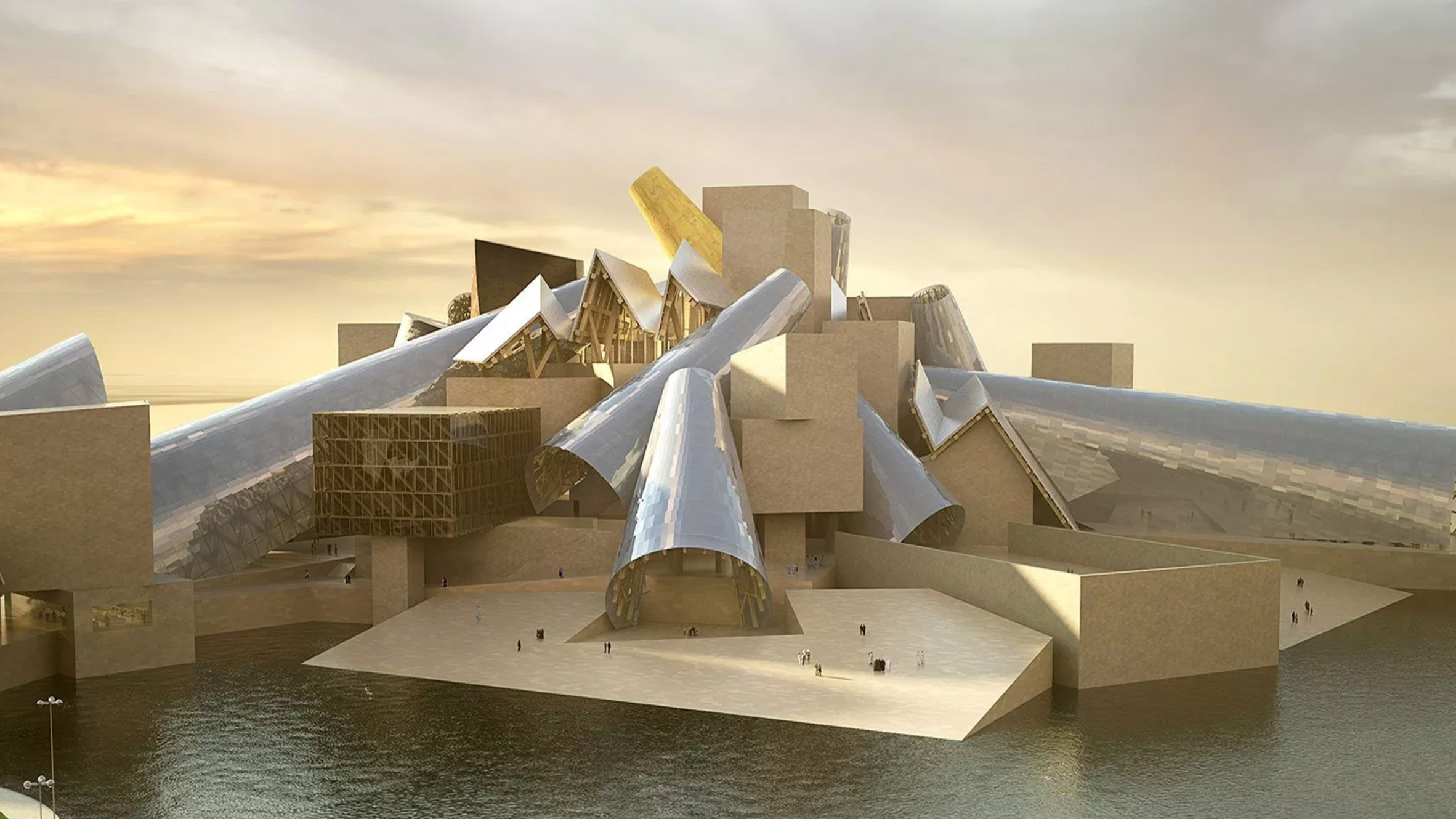
Guggenheim Abu Dhabi in Saadiyat Cultural District
Discover how the Guggenheim Abu Dhabi opening could influence Saadiyat Island real estate, property prices, tourism, hotels, and investment demand ahead of December 2026.
The Guggenheim Abu Dhabi does not open until 11 December 2026. But for Saadiyat Island, the real estate effect has already begun.
With the opening of Guggenheim Abu Dhabi officially scheduled for 11 December 2026, the final piece of Saadiyat Island’s cultural proposition is moving from long-term vision to immediate reality. Designed by the late Frank Gehry and joining Louvre Abu Dhabi, Zayed National Museum, Natural History Museum Abu Dhabi, and teamLab Phenomena Abu Dhabi, the Guggenheim is not simply another museum opening. It is the arrival of a global cultural brand into an already functioning ecosystem.
And the property market is behaving accordingly.
Long before the first visitor walks through Gehry’s monumental entrance, the anticipation surrounding the opening is helping reinforce a proposition that Abu Dhabi’s property market has been building for years: Saadiyat is no longer simply a premium residential island. It is becoming a global cultural address. When a neighbourhood becomes a destination, real estate begins to behave differently. We discussed the much-awaited opening of Guggenheim Abu Dhabi with the CEO and founder of Arabian Sunrise Properties, Maria Mitrea. Here’s our thesis on the impact that the museum will have on the Saadiyat property market.
The Guggenheim effect starts before the ribbon-cutting
The most interesting part of the Guggenheim story may ultimately be what happens before the museum opens. Hotels, restaurants, retailers, developers, and homeowners do not wait for opening day to price in demand. They price in expectations.
That is already visible in Abu Dhabi’s broader hospitality market. In August 2025, for example, Abu Dhabi’s hotel market recorded 79.3% occupancy, while average daily rates reached AED482.32, up 10.6% year-on-year. RevPAR increased 15.4%.
Those figures are emirate-wide rather than a Guggenheim-specific measurement, but they illustrate an important dynamic: Abu Dhabi’s visitor economy is becoming increasingly capable of translating cultural and entertainment demand into higher-value hospitality consumption.
The island combines beaches, luxury resorts, restaurants, and residential communities with what is rapidly becoming one of the world’s most concentrated collections of cultural institutions. Abu Dhabi’s own Media Office describes Saadiyat as a leisure, business, and cultural tourism hub, while the Cultural District is being positioned as a global concentration of museums and cultural experiences. That combination is extraordinarily powerful for real estate.
“One museum can attract some visitors. But a cluster of museums creates a destination. A destination translates into an address. And that address can generate a premium for you.” Maria Mitrea CEO Arabian Sunrise Properties
The numbers are already moving
According to Bayut’s Saadiyat Cultural District price index, properties in the district were averaging approximately AED4,070 per square foot in May 2026, representing a 7.66% increase over the previous 12 months. Several individual developments have recorded substantially stronger gains.
Apartment performance is similarly revealing.
Mamsha Al Saadiyat showed a 16.94% annual increase in Bayut’s index, while Ajwan Towers recorded a much sharper 42.42% rise, albeit from a different and more limited market base. Louvre Abu Dhabi Residences was also up 5.64% year-on-year in the apartment index.
These are not statistics that can be attributed exclusively to the Guggenheim. That would overstate the evidence.
“The more interesting conclusion is that the Guggenheim is arriving into an already accelerating market. Saadiyat is therefore not waiting for the museum to create value. The market is increasingly pricing the museum, and the wider Cultural District, into the future value of the island.” Maria Mitrea, CEO of Arabian Sunrise Properties
Culture is becoming a real-estate amenity
For decades, property value was largely explained by familiar variables: waterfront access, schools, transport, retail, hospitality, and scarcity.
The luxury market is adding another variable: cultural capital.
“Being able to walk to a world-class museum is becoming an amenity in the same way that being able to walk to a private beach or five-star hotel is an amenity. But cultural infrastructure has an additional advantage. A beach is a lifestyle amenity. A museum is a destination generator.”
The Louvre Abu Dhabi provides a powerful precedent. By its fifth anniversary in 2022, it had already attracted more than 3.2 million visitors.
“The individual institutions matter, but the network effect matters more. The visitor no longer travels to Saadiyat for one museum. They travel to Saadiyat because Saadiyat itself has become the experience. That distinction has enormous implications for residential property.”
The “cultural district premium”
According to Arabian Sunrise Properties CEO, this is where the Saadiyat proposition becomes particularly compelling for investors.
“The closer a residence is to the Cultural District, the more it participates in the story. The premium is no longer simply about square metres or sea views. It is about proximity to an internationally recognised cultural ecosystem.”
Current market data supports the existence of a meaningful pricing hierarchy within Saadiyat. Bayut’s figures show the Cultural District commanding prices around AED4,070 per square foot overall, while individual luxury developments can reach well beyond AED5,000 per square foot.
Abu Dhabi’s official H1 2025 real estate report also illustrates price dispersion across Saadiyat’s developments, with reported apartment averages ranging from approximately AED29,000 per square metre at Louvre Residence to AED77,000 per square metre at Nobu Residence, depending on project and positioning.
Saadiyat is not developing into a homogeneous residential market.
It is becoming a branded luxury ecosystem, where architecture, hospitality, beach access, cultural proximity, and scarcity increasingly determine the value of individual addresses.
And Abu Dhabi is scaling the story
The Guggenheim should not be viewed in isolation from the wider transformation of Abu Dhabi.
The emirate’s residential market has been expanding at remarkable speed. In Q1 2026, Abu Dhabi recorded approximately AED66 billion in real estate transactions, up 160.7% year-on-year, according to data from the Abu Dhabi Real Estate Centre. The number of transactions increased from 6,896 to 13,518.
By the first half of 2026, residential property sales reportedly reached AED84.49 billion, with transaction values up 173.9% year-on-year.
Again, these figures are emirate-wide. They cannot be labelled a “Guggenheim effect.”
But they establish the backdrop against which the Guggenheim is arriving: Abu Dhabi is already experiencing a powerful real estate expansion, and Saadiyat represents one of the most strategically differentiated parts of that market.
The museum therefore has the potential to amplify an existing cycle rather than create one from scratch.
From hotel room to investment thesis
When an international visitor comes to Abu Dhabi specifically for culture, the economic impact does not stop at the museum ticket.
It flows into hotels. Then restaurants. Then taxis and private transport. Then entertainment. And ultimately into the perception of the neighbourhood itself. This is the logic behind the famous “Bilbao effect.”
The original Guggenheim Bilbao provides perhaps the most dramatic precedent. In 2025, the museum attracted approximately 1.3 million visitors, with international visitors accounting for around 69% of total attendance. Its activity was estimated to contribute approximately €676.7 million to Basque GDP and sustain more than 14,000 jobs.
The lesson is not that Abu Dhabi will reproduce Bilbao’s numbers.
It is that a globally recognisable cultural institution can create an economic ecosystem far larger than the institution itself. The Guggenheim becomes the reason to come. The city becomes the reason to stay. And the neighbourhood becomes the place where visitors increasingly want to spend time — and, for some, eventually own a home.
Saadiyat is moving from “property” to “place”
The next generation of Abu Dhabi buyers is not simply asking: How much is this apartment worth per square foot?
They are asking: What is this address going to mean five or ten years from now?
That is a very different investment question.
The island already has the Louvre. It has the beach. It has luxury hotels. It has restaurants. It has universities and international residents. It has a rapidly developing cultural infrastructure.
And now it has a confirmed Guggenheim opening date.
The official announcement describes the museum as part of a growing community of cultural institutions on Saadiyat and positions the district as one of the world’s significant concentrations of cultural institutions. The Gehry-designed museum itself will contain 30 galleries, approximately 11,600 square metres of interior gallery space and 23,000 square metres of outdoor exhibition areas.
Why the smartest investors are looking before December
There is an important psychological element to real estate. The market rarely waits for certainty.
By the time something is obvious to everyone, a large portion of the repricing has usually already occurred.
That is precisely why December 11 matters — but perhaps not in the way most people think. The months leading up to it are the opportunity window.
“As international attention builds, the cultural district becomes more visible to global buyers. As hotel demand rises around major cultural and entertainment events, the island’s hospitality proposition strengthens. And as more high-end residential developments are launched around the district, the scarcity of genuinely walkable cultural addresses becomes increasingly apparent.” Maria Mitrea, Arabian Sunrise Properties CEO
The result is a virtuous cycle:
culture drives visitors → visitors drive hospitality → hospitality drives lifestyle demand → lifestyle drives residential demand → residential demand reinforces the value of the cultural district.
The cultural district is becoming the asset
For investors looking at Abu Dhabi’s next decade rather than its next quarter, that may be the defining idea. The real asset is no longer just the apartment. It is the district around the apartment.
And Saadiyat’s district is becoming increasingly difficult to replicate.
World-class museums cannot be built overnight. Gehry architecture cannot be duplicated. Beachfront land is finite. Five-star hospitality takes years to develop. Global cultural brands take decades to establish credibility.
“This is why the Guggenheim’s December opening is more than an event on the Abu Dhabi calendar. A moment when years of cultural investment, infrastructure development, and real estate creation begin to operate as one interconnected proposition.”
And if the experience of Bilbao offers any lesson, the most valuable effects of a Guggenheim may not occur inside its galleries at all.
They may happen outside them — in the hotels, restaurants, retail streets, public spaces, and, increasingly, in the price of the homes surrounding the museum.
The doors open in December.
The market, however, has already started walking in.